(Context)
The layer you cannot screenshot
Rebuilding where things live (A CRM Worth Navigating) fixed the finding. It did nothing about the deeper failure: with no permissions and no sequence, five teams worked the same records at the same time, and every collision was invisible until someone noticed their morning had been erased.
So the subject here isn't a screen. It's the working agreement between five teams — who may touch what, in what order, and whose name goes on it — and the interface is only where that agreement gets installed.
(Owned)
Role model · Permission logic · Status pipeline · Role workflows & UI
(Partnered on)
Engineers · Product Manager · Final role definitions — ops leadership
(Constraint)
My job was turning the org chart into a system that enforces itself.
(Solution)
Restrict, sequence, and sign the work
Every fix below follows one principle: make the system’s rules legible in the interface itself. Not a policy document, not training — the screen you are looking at should tell you what is yours, what is next, and what your name is about to go on.
(Solution 01)
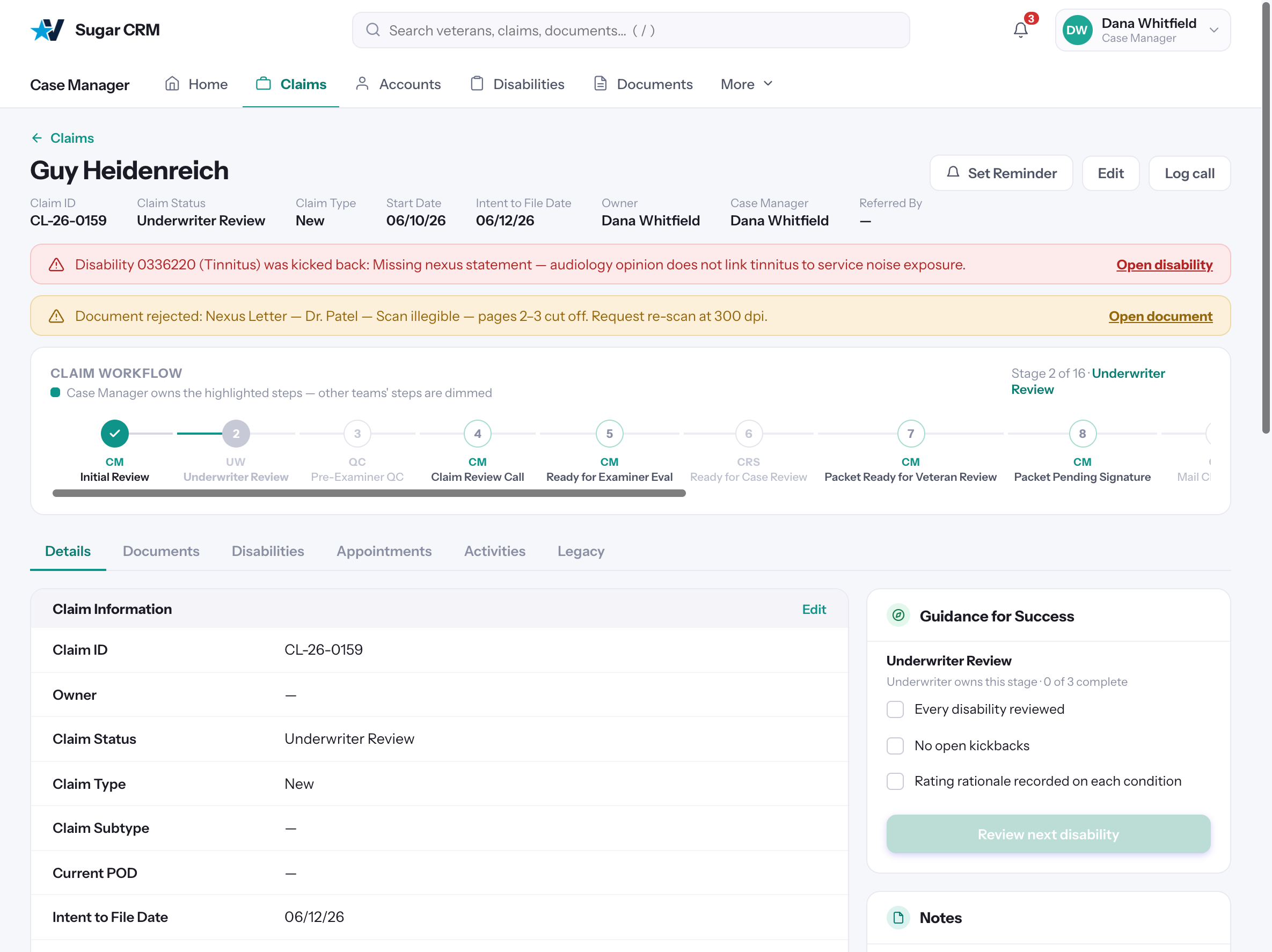
Show each role only its own work
The failure mode was work leaking downstream unverified — so every phase ends in a checkpoint, and every dashboard shows one role’s work only, because anything else on screen was a chance to break someone else’s.
Drawing those boundaries meant settling where one role’s ownership ended and the next began — the hardest lines to draw were the records two roles both had reason to touch, and getting them right took working through the real cases with the leads.
(Solution 02)
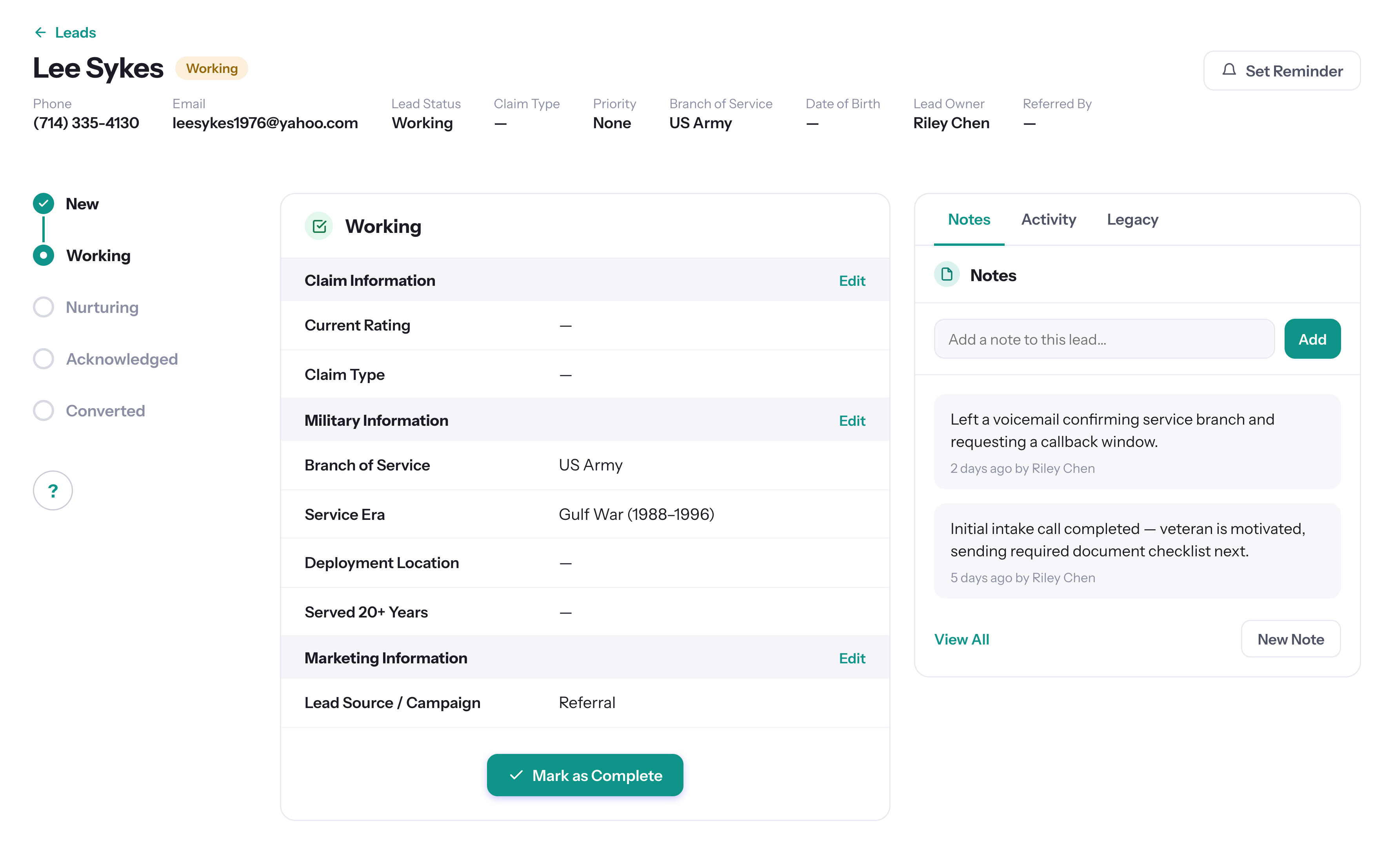
Two kinds of work, two kinds of flow
Forcing one flow on both kinds of work would have broken one of them: intake is sequential, review is not.
(Solution 03)
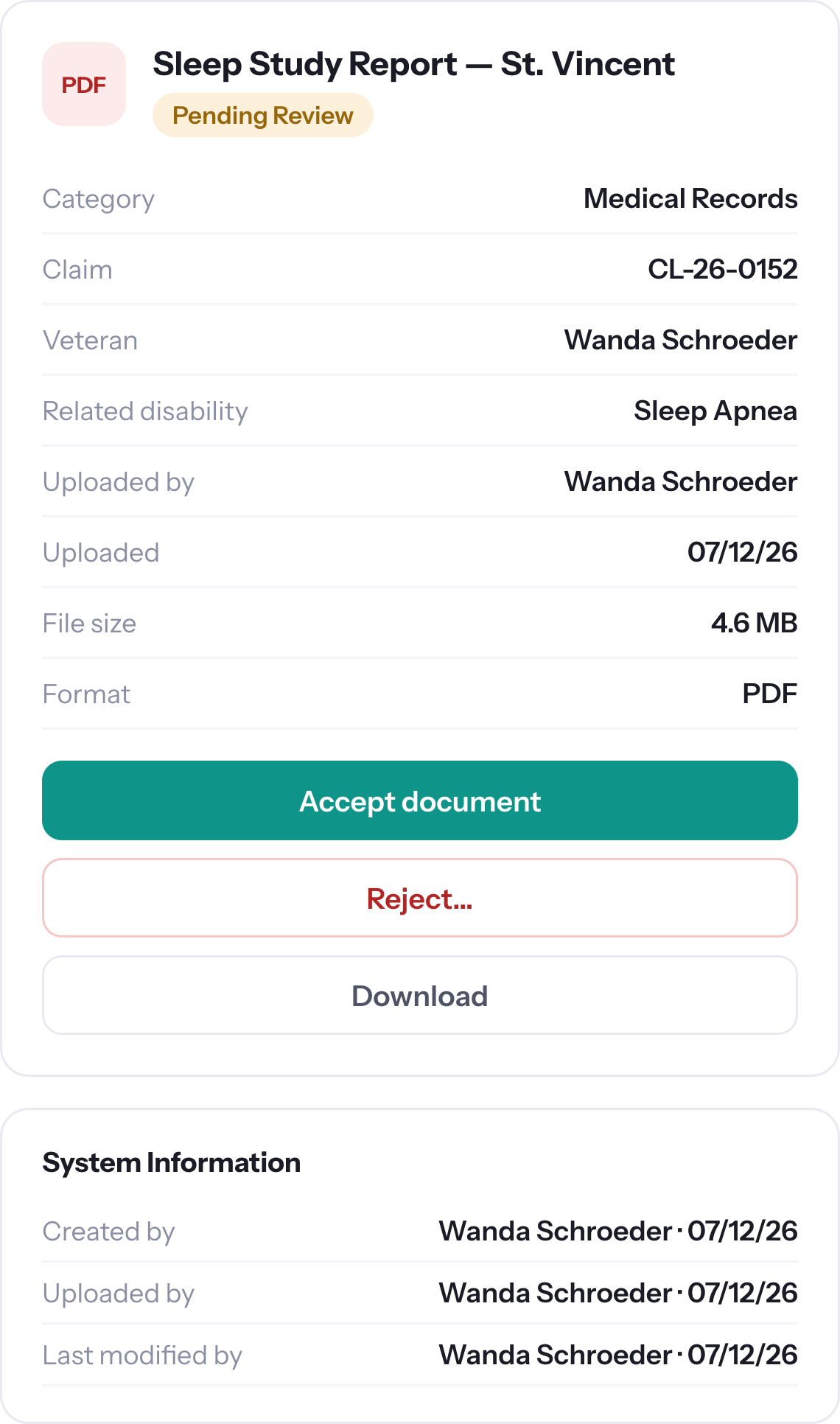
Status defines the action
A reviewer’s real unit of work is the queue, not the row, so state had to read across a full screen at a glance, and progress had to survive interruption.
(Solution 04)
Make accountability an interaction, not a policy
Accountability only sticks when someone chooses to put their name on it — so completion is a deliberate act, not an automatic flip, backed by an immutable record. Careless errors dropped measurably.